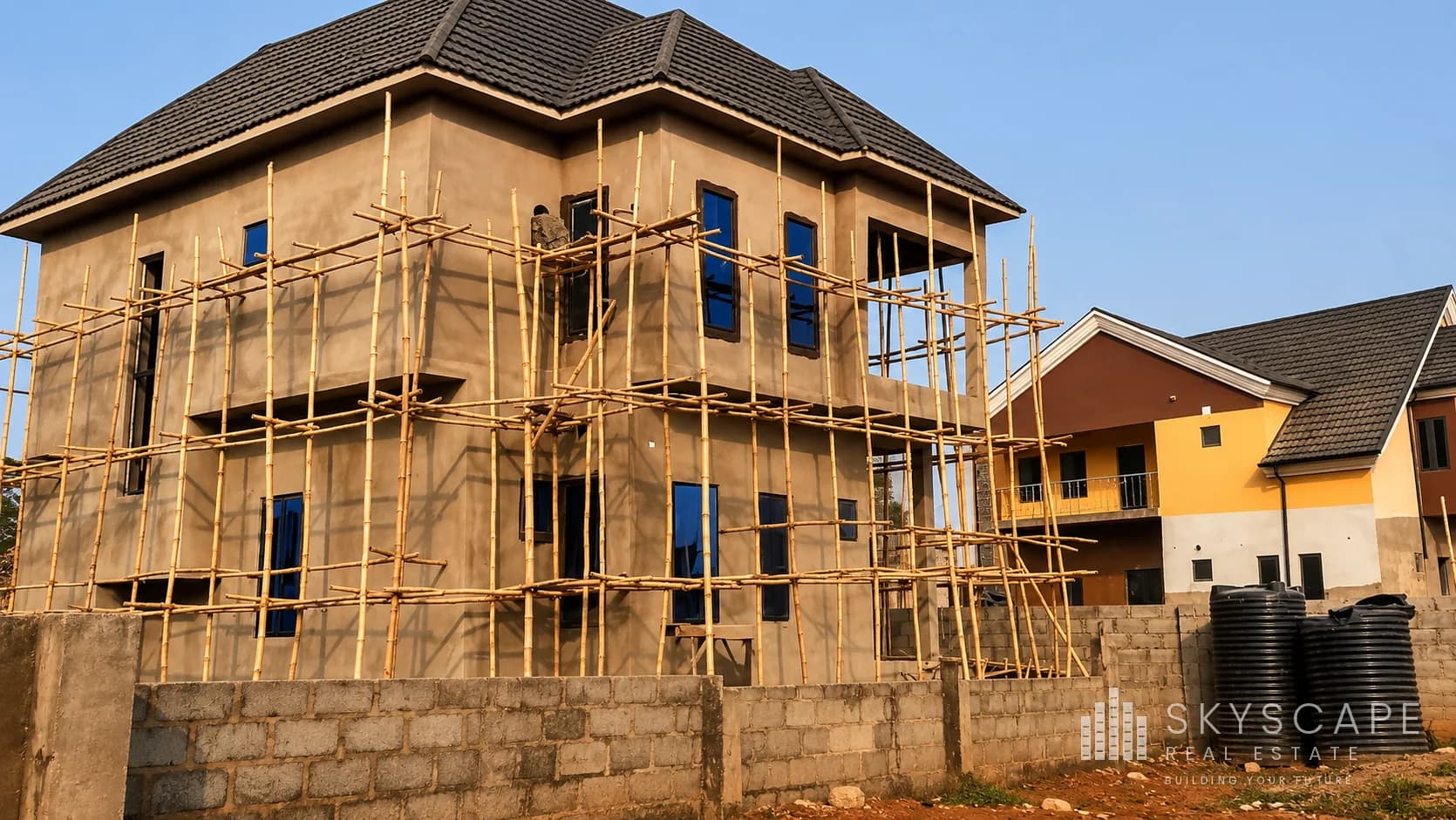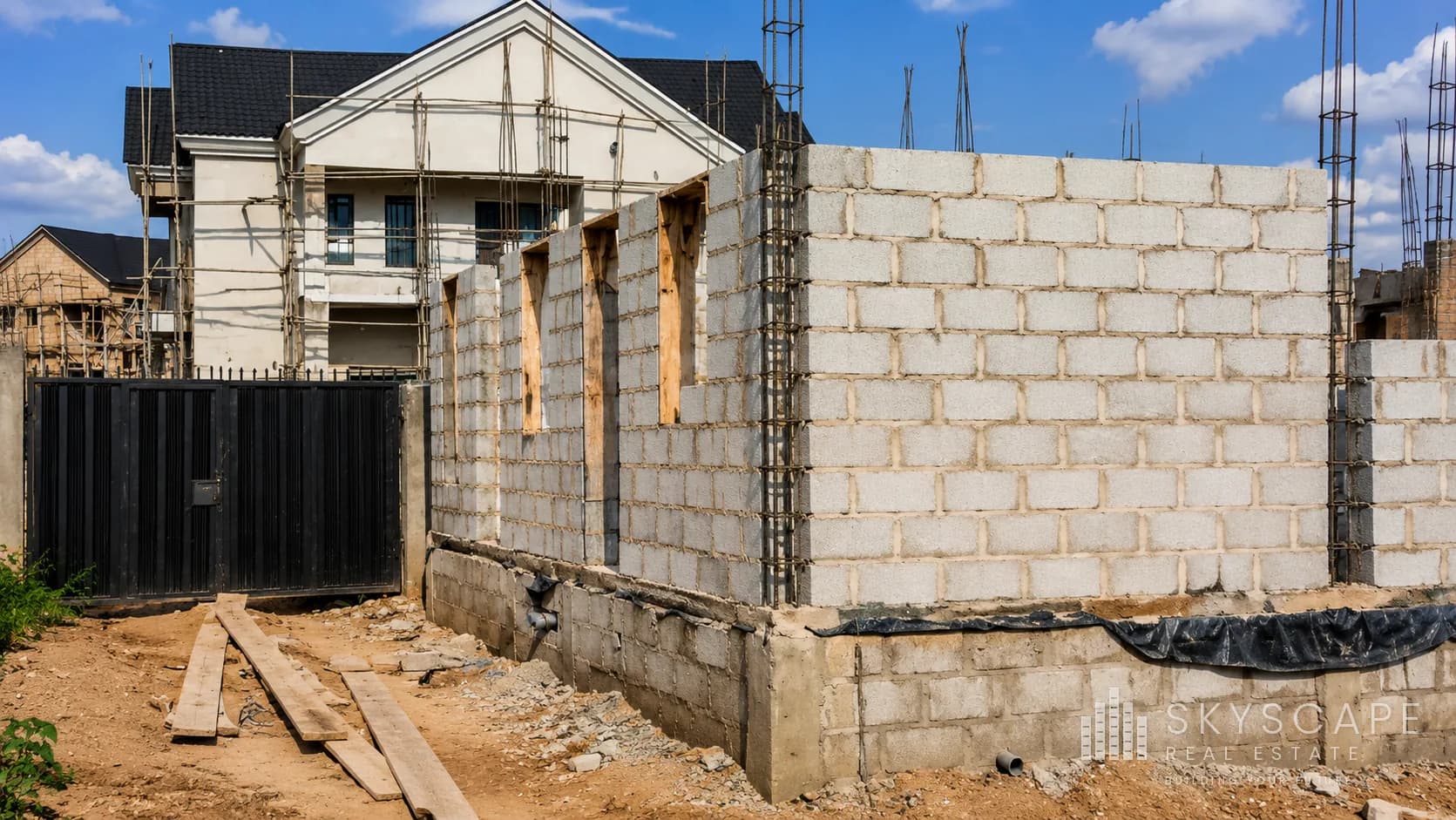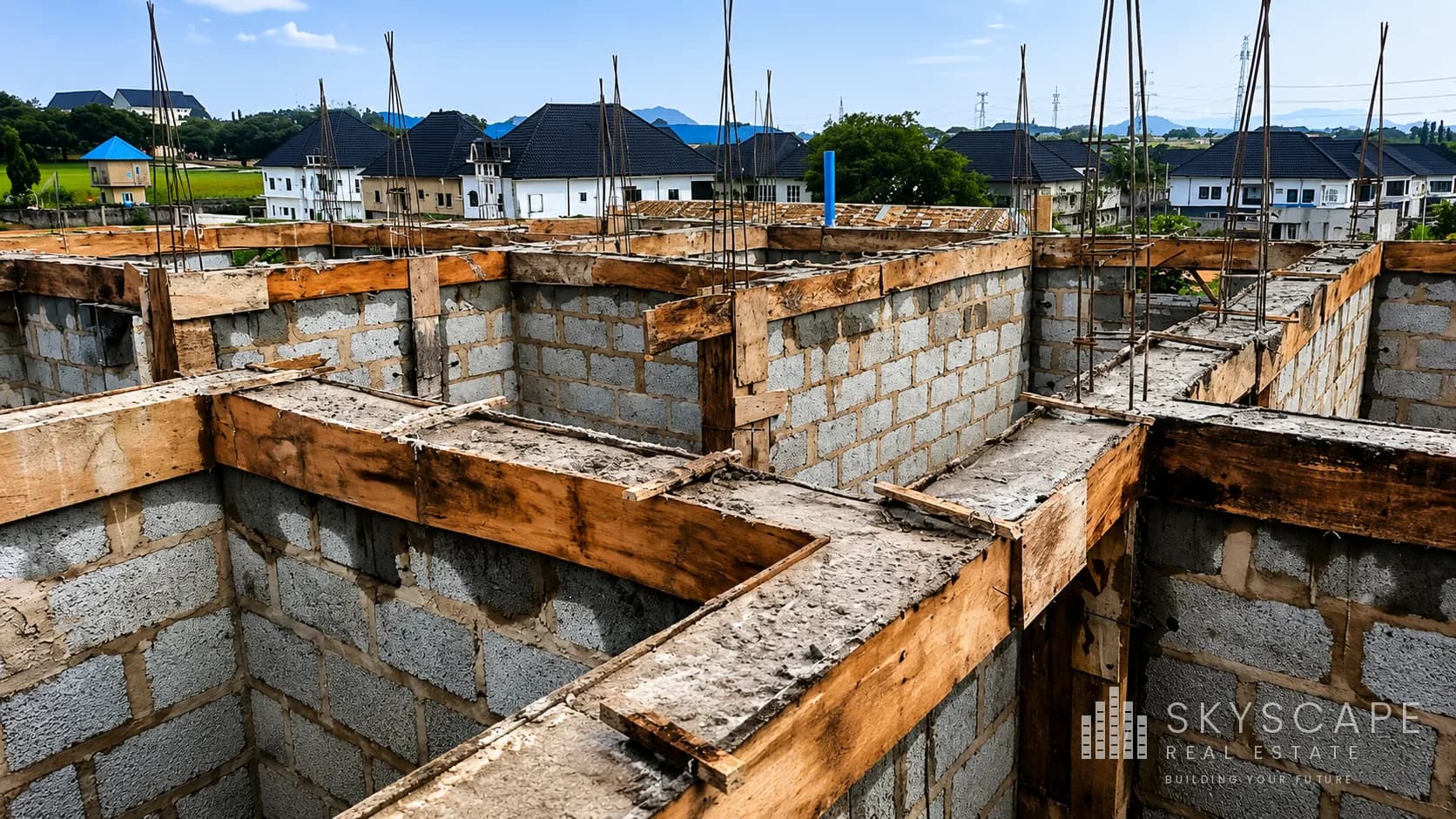
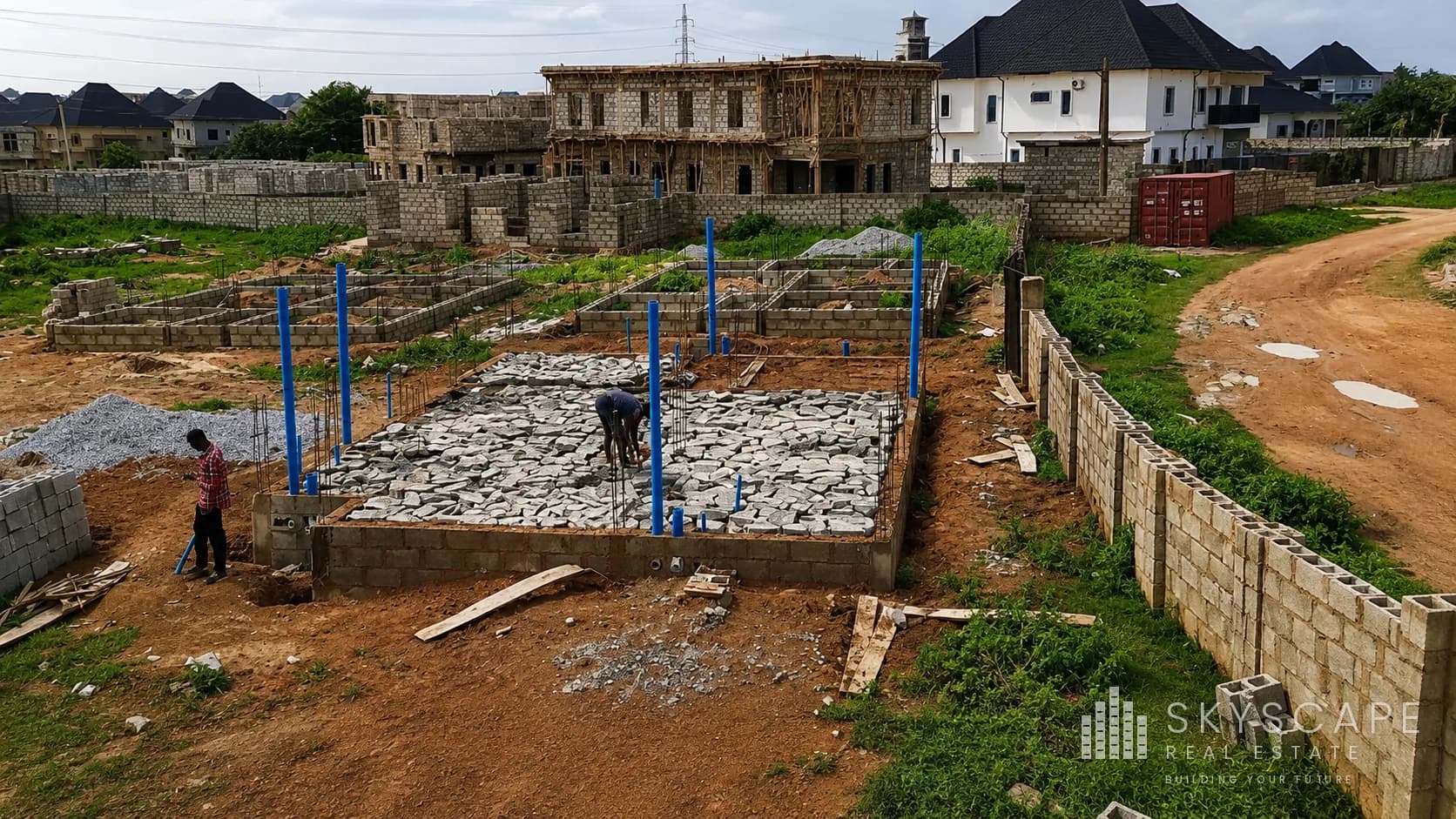
Drive through any developing estate in Abuja and you will pass abandoned structures — walls to lintel level, no roof, weeds established in what was going to be a sitting room. Each one represents somebody’s savings.
Very few of those projects failed because of an engineering problem. They failed because of decisions made before construction started, when everything still looked straightforward. These are the seven that recur most often.
1. Buying land without verifying title
This is the most expensive mistake available, because it is rarely recoverable. Payment is made, sometimes years of it, and the defect only surfaces when the buyer applies for approval, attempts to sell, or meets a second party holding a competing claim.
Verify before you pay, not after. Confirm the title document and its chain of ownership, check the plot number and coordinates against the allocation, confirm the approved land use matches what you intend to build, and search for encumbrances or overlapping allocations.
2. Skipping the soil investigation
Foundation design should follow from what the ground can carry. Without a soil test, it follows from assumption — usually the assumption that this plot behaves like the one next door.
Ground conditions in Nigeria vary sharply over short distances, particularly on sloping sites or filled land. A foundation designed for the wrong conditions produces differential settlement, and settlement produces diagonal cracking that no amount of plastering resolves.
The foundation is also the only element that cannot be corrected later without dismantling everything above it. A soil investigation costs a small fraction of a percent of the project. It is the highest-return spend available.
3. Budgeting for construction but not for the project
A budget covering blocks, cement, sand and labour is a materials estimate, not a project budget. The items routinely omitted are the ones that stop work: professional fees, statutory approvals, site preparation, boundary walls, water supply, electrical connection, and finishes.
Contingency belongs in the budget too. Ground conditions surprise people, prices move, and designs get refined. A project without contingency does not avoid these costs — it meets them by stopping, which is the most expensive response available.
- Land, documentation and search costs
- Design fees and statutory approvals
- Site clearance, access and boundary works
- Substructure, superstructure and roofing
- Mechanical, electrical, water and power provision
- Finishes, fittings and external works
- Contingency
4. Starting construction before the design is finished
Building from a floor plan and a general intention is common, and it is the most reliable way to exceed a budget. Every decision left to site is made under time pressure, without comparison, and usually at a higher price than the same decision made calmly beforehand.
It also produces rework. A staircase repositioned after the slab is cast, a bathroom moved after the plumbing is run — each of these is paid for twice, once to build and once to undo.
Complete the architectural, structural and services design before mobilising. Specify finishes down to make and model where it matters. The design stage is the cheapest place to change your mind.
5. Treating approvals as a formality
Development permits are not paperwork appended to a project; they are a gate the project must pass through. Applications are most often rejected for incompleteness or for conflicting with zoning — setbacks, coverage, height or permitted use.
Building without approval exposes the work to stop-work orders and penalties, and produces a property that is difficult to mortgage, insure or sell. Most unapproved construction does not begin as a decision to break the rules. It begins as a decision to avoid a delay.
6. Choosing a contractor on price alone
When one quotation is far below the others, the difference is almost never efficiency. It is scope — something omitted, priced thin, or specified down, which reappears later as a variation at a moment when you have no leverage.
Compare quotations on scope first. Ask for an itemised bill of quantities rather than a lump sum, verify registration, and speak to previous clients directly rather than accepting photographs as evidence.
7. Building in instalments without a funding plan
Funding a build from irregular income is common and can work — but only when the programme is planned around it. What does not work is starting at a pace the funding cannot sustain and stopping when it runs out.
Stalled sites deteriorate. Exposed reinforcement corrodes, unprotected blockwork absorbs water, secured materials disappear, and remobilisation carries its own cost. A site stopped for eighteen months does not resume where it paused.
If funding will be staged, build in complete, weatherproof stages rather than advancing everything simultaneously. Reaching roof level on a smaller footprint protects your investment better than reaching lintel level on a larger one.